Question 1
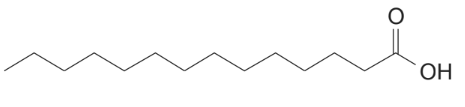
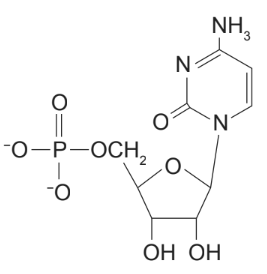
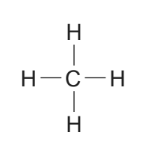
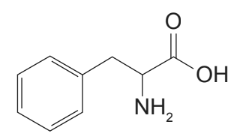
The diagrams show the molecular structure of carbon compounds found in living organisms. Which one is found in phospholipids?
| A. |
|
| B. |
|
| C. |
|
| D. |
|
Easy
Mark as Complete
Mark Scheme
Question 2
The Miller–Urey experiment carried out in 1952 tested the hypothesis of the chemical origin of life. What were the key findings?
A. Living cells could be produced from a mixture of chemicals.
B. Complex organic molecules could form under simulated primordial conditions.
C. Life could spontaneously emerge without external influence.
D. DNA and RNA could self-replicate in a prebiotic environment.
Easy
Mark as Complete
Mark Scheme
Question 3
Which of the following characteristics found in a structure necessarily indicates that it is alive?
A. The presence of genetic material
B. The presence of a lipid bilayer
C. Metabolism
D. Movement
Hard
Mark as Complete
Mark Scheme
Question 4
Fossils provide important evidence for evolution. Outline how radioisotopes can be used to date fossils. [2]
Easy
Mark as Complete
Mark Scheme
Question 5
What feature of carbon makes it most suitable as a basis for life?
A. Its abundance in nature
B. Its bonding properties
C. Its reactivity to light
D. Its presence in the early atmosphere of the Earth
Easy
Mark as Complete
Mark Scheme
Question 6
The first iron ore deposits in rocks appeared about 1.8 billion years ago. What took place to make this occur?
A. Some prokaryotic organisms began to absorb carbon dioxide from seawater.
B. Some eukaryotic organisms began to absorb carbon dioxide from seawater.
C. Some prokaryotic organisms began to release oxygen into seawater.
D. Some eukaryotic organisms began to release oxygen into seawater.
Medium
Mark as Complete
Mark Scheme
Question 7
What would you expect to find in the fossil record if evolution had not occurred?
A. Fossils of simple organisms only in the oldest layers
B. Only fossils of extinct forms
C. Fossils of complex organisms only in the oldest layers
D. Same fossil forms in all layers
Medium
Mark as Complete
Mark Scheme
Question 8
What is a piece of evidence that all living organisms share a common ancestor?
A. They manufacture the same proteins.
B. They obtain energy from glucose.
C. DNA triplets code for the same amino acids.
D. Cells can synthesise all the amino acids.
Medium
Mark as Complete
Mark Scheme
Question 9
Discuss possible locations where conditions would have allowed the synthesis of organic compounds. [2]
Medium
Mark as Complete
Mark Scheme
Question 10
Biologists base their theories about the natural world on evidence, which can come from observations or from controlled experiments.
Explain how observation of the fossil record provides evidence for evolution. [4]
Mark as Complete
Mark Scheme
Question 1
The diagrams show the molecular structure of carbon compounds found in living organisms. Which one is found in phospholipids?
| A. |
|
| B. |
|
| C. |
|
| D. |
|
Answer: A
A. Correct. This structure is a fatty acid, which is a long hydrocarbon chain ending with a carboxyl group (–COOH). Phospholipids are made up of two fatty acids, a glycerol, and a phosphate group, so fatty acids (A) are part of phospholipids.
B. Incorrect. This is a nucleotide (contains a phosphate group, sugar, and nitrogenous base) found in nucleic acids like DNA and RNA, not in phospholipids.
C. Incorrect. This is ethanol (`CH_3CH_2OH`), a simple alcohol, not a component of phospholipids.
D. Incorrect. This is an amino acid (phenylalanine), which is a building block of proteins, not phospholipids.
Question 2
The Miller–Urey experiment carried out in 1952 tested the hypothesis of the chemical origin of life. What were the key findings?
A. Living cells could be produced from a mixture of chemicals.
B. Complex organic molecules could form under simulated primordial conditions.
C. Life could spontaneously emerge without external influence.
D. DNA and RNA could self-replicate in a prebiotic environment.
Answer: B
A. Incorrect. The Miller-Urey experiment produced simple organic compounds such as amino acids, but not living cells. The appearance of the first cells remains a major challenge in biology.
B. Correct. The Miller-Urey experiment demonstrated that simple organic molecules (such as amino acids, which are components of proteins) could be naturally synthesized outside cells under simulated early Earth conditions (a mixture of `CH_4, NH_3, H_2O, H_2` gases and electrical discharges).
C. Incorrect. The experiment used energy from electrical discharges (simulating lightning), showing that an external energy source was needed for carbon compounds to form. Furthermore, the experiment produced only organic molecules, not complete living organisms.
D. Incorrect. Although some carbon compounds (including nitrogenous bases) were produced, the formation of nucleotides or self-replicating DNA/RNA was not a result of the Miller-Urey experiment. Self-replication is required for life, but it was not a main finding of this study.
Question 3
Which of the following characteristics found in a structure necessarily indicates that it is alive?
A. The presence of genetic material
B. The presence of a lipid bilayer
C. Metabolism
D. Movement
Answer: C
A. Incorrect. The presence of genetic material (DNA or RNA) does not necessarily indicate life. For example, viruses contain genetic material but are generally not considered living.
B. Incorrect. All cells have a plasma membrane, but protocells (such as lipid droplets) can also have lipid bilayers and are not necessarily alive.
C. Correct. Metabolism is one of the essential processes required to sustain life. It is a complex network of interacting chemical reactions that produce energy for growth and maintenance. Viruses lack metabolism.
D.Incorrect. Movement (including intracellular or whole-organism motion) is a function of life, but nonliving materials can also move (e.g., Brownian motion), and sessile organisms are still considered alive.
Question 4
Fossils provide important evidence for evolution. Outline how radioisotopes can be used to date fossils. [2]
Any two of the following:
a. original concentration of the radioisotope must be established/estimated;
b. rate of decay/half-life of the isotope must be known;
c. in radiocarbon dating concentration of the surviving 14C in the fossil is measured;
d. in potassium-argon dating ratio of 40K to 40Ar atoms are measured;
Sample answer:
Radioisotopes can be used to date fossils because their rate of decay is predictable. To determine a fossil’s age, the half-life of the isotope must be known [1], allowing scientists to calculate how long it has been decaying. In radiocarbon dating, the concentration of the remaining 14C in the fossil is measured [1] and compared with its expected original level, enabling an estimate of the time since the organism died.
Question 5
What feature of carbon makes it most suitable as a basis for life?
A. Its abundance in nature
B. Its bonding properties
C. Its reactivity to light
D. Its presence in the early atmosphere of the Earth
Answer: B
A. Incorrect. Carbon is only the 15th most abundant element on Earth. Although it was present in the early atmosphere, abundance alone is not the main reason it is so suitable.
B. Correct. Carbon is the foundation of biological molecules because its unique chemical properties allow the formation of a wide variety of molecules, providing an almost limitless range of functions. A carbon atom can form four strong, stable covalent bonds. These covalent bonds are among the strongest in biological molecules. Carbon can also form stable chains, branched chains, and ring structures with other carbon atoms. No other element can form as many compounds or such diverse structures as carbon.
C. Incorrect. Although some carbon compounds react with UV light, this is not the reason carbon is the basis of life; life requires stable bonds to store information and maintain structure.
D. Incorrect. Carbon dioxide was a greenhouse present in high concentration in the early atmosphere, helping to form prebiotic carbon compounds. However, it is carbon’s bonding properties, not its mere presence, that make it the most suitable element for life.
Question 6
The first iron ore deposits in rocks appeared about 1.8 billion years ago. What took place to make this occur?
A. Some prokaryotic organisms began to absorb carbon dioxide from seawater.
B. Some eukaryotic organisms began to absorb carbon dioxide from seawater.
C. Some prokaryotic organisms began to release oxygen into seawater.
D. Some eukaryotic organisms began to release oxygen into seawater.
Answer: C
A. Incorrect. Absorbing carbon dioxide (photosynthesis) is an input process, but the release of oxygen is what reacts with iron to form iron oxide.
B. Incorrect. Eukaryotic organisms appeared much later in Earth’s history, around 1 billion years ago. The process was carried out by photosynthetic bacteria (prokaryotes).
C. Correct. Oxygen production by photolysis in cyanobacteria (a type of prokaryote) led to the oxidation of dissolved iron in the oceans. This formed iron oxides that precipitated and settled as banded iron formations (BIFs). This process occurred about 2.5-2.8 billion years ago.
D. Eukaryotic organisms appeared too late; cyanobacteria were the first to produce oxygen.
Question 7
What would you expect to find in the fossil record if evolution had not occurred?
A. Fossils of simple organisms only in the oldest layers
B. Only fossils of extinct forms
C. Fossils of complex organisms only in the oldest layers
D. Same fossil forms in all layers
Answer: D
A. Incorrect. This is what we actually see in the fossil record, providing evidence for evolution.
B. Incorrect. If evolution had not occurred, life forms would not change, so we wouldn’t see older forms replaced by newer ones (although mass extinctions could still happen).
C. Incorrect. The fossil record shows that life has changed and become more complex over time.
D. Correct. Evolution is defined as the cumulative change in the heritable characteristics of a population over time. If evolution had not occurred, there would be no change, and the same simple and complex life forms would appear in all sedimentary rock layers (strata).
Question 8
What is a piece of evidence that all living organisms share a common ancestor?
A. They manufacture the same proteins.
B. They obtain energy from glucose.
C. DNA triplets code for the same amino acids.
D. Cells can synthesise all the amino acids.
Answer: C
A. Incorrect. Different organisms, as well as different cells within the same multicellular organism, possess distinct sets of proteins (proteomes). Although some proteins, such as ribosomal proteins and histones, are highly conserved, it is not accurate to say that all organisms produce the same proteins.
B. Incorrect. Glucose is a preferred respiratory substrate because it is easily oxidized, and it is a major substrate used in cellular respiration. However, not all organisms obtain energy primarily from glucose. For example, autotrophs must synthesise glucose themselves through photosynthesis or chemosynthesis, and many organisms can use other respiratory substrates. Although shared metabolic pathways support common ancestry, the universality of the genetic code is considered stronger evidence.
C. Correct.The universality of the genetic code is one of the strongest biochemical pieces of evidence showing that all living organisms share a common ancestor. The 64 codons in the DNA genetic code have the same meanings and code for the same amino acids in almost all organisms. This supports the idea of a shared origin of life on Earth. This continuity shows the connection among all organisms and that all life ultimately shares a last universal common ancestor (LUCA).
D. Combustion of fossil fuels in cars and factories emits large amounts of CO2 into the atmosphere, which is a major cause of enhanced greenhouse effect and climate change.
Question 9
Discuss possible locations where conditions would have allowed the synthesis of organic compounds. [2]
Any two of the following:
a. in water as organic reactions are aqueous;
b. warm conditions/pools near geothermal vents/volcanic pools allow high reaction rates;
c. evaporation of water allows organic (precursor) molecules to become more concentrated;
d. high temperatures not desirable as organic molecules become unstable;
clay minerals/metal ions may act as catalysts / clay forms a matrix for monomers to attach;
Sample answer:
Possible locations where conditions would have allowed the synthesis of organic compounds include warm, shallow pools near geothermal vents or volcanic areas, where warm conditions increase the rate of chemical reactions [1]. In addition, clay minerals or metal ions in these environments could have acted as catalysts, providing surfaces for organic monomers to attach and react [1]. These settings would therefore have provided both the energy and the catalytic surfaces needed for the formation of more complex organic molecules on early Earth.
Question 10
Biologists base their theories about the natural world on evidence, which can come from observations or from controlled experiments.
Explain how observation of the fossil record provides evidence for evolution. [4]
Any four of the following:
a. fossils show the types of organisms that lived in the past;
b. fossils can provide direct (bones/teeth/shells/leaves) or indirect;
(footprints/tooth marks/burrows) evidence left in layers of rocks;
c. fossils can be dated by radioisotope dating of the rocks that hold them / the study of the different strata/sediment layers can help determine the relative age of fossils;
d. the sequence in which fossils appear matches the sequence in which species evolved;
e. (sequences of) fossils show (progressive) change over time / fossils show the sequence in which characteristics appear;
f. increase in complexity of structures over time/simplest organisms longest ago;
g. example of fossil sequence / example of increase in complexity over time;
h. dinosaurs/trilobites/other extinct group in the fossil record suggest that
organisms change over time / fossils are evidence of species that no longer exist / transition species;
i. evidence of similar features/structures / evolution of homologous structures link existing organisms with their likely ancestors / fossils can show common ancestry / evolution of homologous structures;
Sample answer:
Observation of the fossil record provides strong evidence for evolution. Fossils show the types of organisms that lived in the past [1] and can be preserved as direct evidence such as bones, teeth, or shells, or indirect evidence such as footprints or burrows [1]. The sequence of fossils found in different rock layers matches the sequence in which species are believed to have evolved, showing how life forms have changed gradually over time [1]. Furthermore, fossils show an increase in complexity of structures over time, from simple organisms in older layers to more complex forms in recent layers, supporting the idea of progressive evolutionary change [1].
Question 1
The diagrams show the molecular structure of carbon compounds found in living organisms. Which one is found in phospholipids?
| A. |
|
| B. |
|
| C. |
|
| D. |
|
Question 2
The Miller–Urey experiment carried out in 1952 tested the hypothesis of the chemical origin of life. What were the key findings?
A. Living cells could be produced from a mixture of chemicals.
B. Complex organic molecules could form under simulated primordial conditions.
C. Life could spontaneously emerge without external influence.
D. DNA and RNA could self-replicate in a prebiotic environment.
Question 3
Which of the following characteristics found in a structure necessarily indicates that it is alive?
A. The presence of genetic material
B. The presence of a lipid bilayer
C. Metabolism
D. Movement
Question 4
Fossils provide important evidence for evolution. Outline how radioisotopes can be used to date fossils. [2]
Question 5
What feature of carbon makes it most suitable as a basis for life?
A. Its abundance in nature
B. Its bonding properties
C. Its reactivity to light
D. Its presence in the early atmosphere of the Earth
Question 6
The first iron ore deposits in rocks appeared about 1.8 billion years ago. What took place to make this occur?
A. Some prokaryotic organisms began to absorb carbon dioxide from seawater.
B. Some eukaryotic organisms began to absorb carbon dioxide from seawater.
C. Some prokaryotic organisms began to release oxygen into seawater.
D. Some eukaryotic organisms began to release oxygen into seawater.
Question 7
What would you expect to find in the fossil record if evolution had not occurred?
A. Fossils of simple organisms only in the oldest layers
B. Only fossils of extinct forms
C. Fossils of complex organisms only in the oldest layers
D. Same fossil forms in all layers
Question 8
What is a piece of evidence that all living organisms share a common ancestor?
A. They manufacture the same proteins.
B. They obtain energy from glucose.
C. DNA triplets code for the same amino acids.
D. Cells can synthesise all the amino acids.
Question 9
Discuss possible locations where conditions would have allowed the synthesis of organic compounds. [2]
Question 10
Biologists base their theories about the natural world on evidence, which can come from observations or from controlled experiments.
Explain how observation of the fossil record provides evidence for evolution. [4]