
Question 1
What occurs during competitive exclusion between two species?
I. They compete for the same resources so cannot coexist in the same niche.
II. Competing species are regulated by predators in the ecosystem.
III.Both species are restricted to a part of their fundamental niche.
A. I and II only
B. I and III only
C. II only
D. I, II and III
Medium
Mark as Complete
Mark Scheme
Question 2
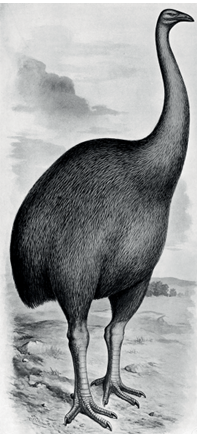
The North Island giant moa (Dinornis novaezealandiae) went extinct sometime between the arrival of humans in New Zealand and the 1800s.
What do scientists believe to be the cause of this extinction?
A. Deforestation.
B. New diseases.
C. Competition with other megafauna.
D. Overhunting.
Medium
Mark as Complete
Mark Scheme
Question 3
What are causes for a global reduction in biodiversity?
I. Increase in size of towns and cities
II. Reclamation of degraded ecosystems
III. Clearance of land for agriculture
A. I and II only
B. I and III only
C. II and III only
D. I, II and III
Easy
Mark as Complete
Mark Scheme
Question 4
Outline one consequence of introducing an alien species into an ecosystem [2]
Easy
Mark as Complete
Mark Scheme
Question 5
The Atlantic cod is considered in many countries to be endangered due to overfishing. Describe two methods that could be used to estimate the cod population. [2]
Medium
Mark as Complete
Mark Scheme
Question 6
Outline how deforestation can affect the richness of biodiversity in an ecosystem?
Medium
Mark as Complete
Mark Scheme
Question 7
Distinguish between ex situ and in situ conservation of endangered species
Medium
Mark as Complete
Mark Scheme
Question 8
Outline the biogeographical features of nature reserves that promote the conservation of diversity [3]
Medium
Mark as Complete
Mark Scheme
Question 9
The Simpson diversity index is used to calculate the species richness in an ecosystem.
`D = frac{N(N-1)}{Sigman(n-1)}`
Define the terms N and n in the formula above. [2]
Easy
Mark as Complete
Mark Scheme
Question 10
Discuss reasons why biodiversity in a rain forest should be conserved. [6]
Medium
Mark as Complete
Mark Scheme
Question 1
What occurs during competitive exclusion between two species?
I. They compete for the same resources so cannot coexist in the same niche.
II. Competing species are regulated by predators in the ecosystem.
III.Both species are restricted to a part of their fundamental niche.
A. I and II only
B. I and III only
C. II only
D. I, II and III
Answer: B
I. The competitive exclusion principle states that no two species can occupy the exact same niche. If two species share the same resource in the same place at the same time, the dominant species will exclude the other. The weaker competitor will either die out or move elsewhere to avoid competition.
II. Predation is an example of an external density-dependent factor that can limit population growth. Predator–prey relationships create a negative feedback mechanism that controls population size. However, the competitive exclusion principle itself describes the outcome of direct competition between two species for limited resources. The idea that competing species are regulated by predators (top-down control) is a broader ecological concept, not the core mechanism or definition of competitive exclusion.
III. Interspecific competition is a biological factor that limits the realized niche of a species compared to its fundamental niche (the full potential range it could occupy). One outcome of competition is that both species occupy only part of their fundamental niche. This was demonstrated in Joseph Connell’s barnacle experiments, where competition narrowed the realized niche of Chthamalus.
A. Incorrect. Statement II is not part of the definition or mechanism of competitive exclusion, even though predation can limit populations.
B. Correct. Both statements I and III describe direct aspects or outcomes of the competitive exclusion principle, including the impossibility of coexistence in the same niche and the restriction of the realized niche.
C. Incorrect. Statement II does not describe competitive exclusion.
D. Incorrect. Statement II is not true.
Question 2
The North Island giant moa (Dinornis novaezealandiae) went extinct sometime between the arrival of humans in New Zealand and the 1800s.
What do scientists believe to be the cause of this extinction?
A. Deforestation.
B. New diseases.
C. Competition with other megafauna.
D. Overhunting.
Answer: D
A. Incorrect. Early human settlers did burn forests, but not at a scale or speed that would alone wipe out moa. Moa lived in multiple habitats (grasslands, shrublands, forests), and habitat loss does not match the rapid disappearance seen in the fossil and archaeological record.
B. Incorrect. There is no evidence that humans brought diseases that infected moa. Their extinction pattern follows human hunting, not disease outbreaks.
C. Incorrect. There were no large non-human mammals in New Zealand before human arrival. Moa did not face significant competition from other megafauna - New Zealand simply didn’t have them.
D. Correct. Human hunting, combined with egg harvesting, is the primary and well-supported cause. The extinction occurred quickly after human arrival, consistent with overexploitation.
Question 3
What are causes for a global reduction in biodiversity?
I. Increase in size of towns and cities
II. Reclamation of degraded ecosystems
III. Clearance of land for agriculture
A. I and II only
B. I and III only
C. II and III only
D. I, II and III
Answer: B
I. The expansion of towns and cities is a major cause of biodiversity decline. Urbanization (the increasing proportion of people living in urban areas) changes land use and destroys natural ecosystems. Large areas have been converted into housing, offices, factories, and infrastructure such as roads. As urbanization continues to grow, natural habitats shrink further, worsening the current biodiversity crisis.
II. Restoring or rehabilitating degraded ecosystems is not a cause of biodiversity loss; rather, it is an effort to improve and reverse this decline. Activities such as reclamation and rewilding aim to restore natural processes and wildlife in areas previously altered by humans. Therefore, this statement describes a conservation action meant to increase biodiversity, not a factor that reduces it.
III. Clearing land for agriculture is one of the largest drivers of habitat loss and global biodiversity decline. Deforestation and the conversion of land for crop production or livestock have caused significant losses of natural ecosystems such as forests and grasslands. Today, about 13 billion hectares of land are used for agriculture, and the continued expansion of farming plays a major role in the ongoing biodiversity crisis.
A. Incorrect. Statement II describes actions to restore biodiversity, not reduce it.
B. Correct. Both statement I (urbanization) and statement III (agriculture) are human-driven causes of habitat loss and biodiversity decline.
C. Incorrect. Statement II is a biodiversity-restoration method.
D. Incorrect. Statement II is not a cause of biodiversity loss.
Question 4
Outline one consequence of introducing an alien species into an ecosystem [2]
Any one sub-point from each of the two main points following:
a. uncontrolled increase of numbers «in alien species»
OR
become invasive
OR
have no «natural» predators
b. outcompetes native species / reduces biodiversity
OR
carries disease
OR
preys on local species decreasing population size
OR
disrupts food chains/webs
Sample answer:
The introduction of alien species into an ecosystem often leads to their success because they lack natural predators or other limiting factors in the new environment, allowing them to reproduce quickly and increase in number [1]. As their population grows, these non-native species can become invasive [1] and compete intensely for resources such as food or space, with native species that occupy similar or overlapping niches. As a result, the dominant invasive species outcompetes the native species, forcing them into a smaller realized niche or, in more severe cases, reducing their population size [1], ultimately leading to a decline in biodiversity [1] within the ecosystem.
Question 5
The Atlantic cod is considered in many countries to be endangered due to overfishing. Describe two methods that could be used to estimate the cod population. [2]
Any two of the following (Award marks only for the first two methods if more than two written):
a. Record size of catches from fishing boats;
b. Capture, tagging, releasing and recapturing fish / Lincoln index;
c. Sample fishes with trawling nets;
d. Estimate population with echo sounder/sonar/fish finder;
Sample answer:
One method to estimate the Atlantic cod population is to use the capture, tagging, releasing, and recapturing technique [1], also known as the Lincoln index. In this method, a sample of cod is caught, tagged, and released back into the sea. After some time, another sample is captured, and the proportion of tagged to untagged fish is used to estimate the total population. A second method involves sampling fishes with trawling nets [1], where scientists catch cod in specific areas and count them. By analyzing the number of fish caught per unit area and extrapolating this data across the habitat, an estimate of the overall population can be made. Both methods provide valuable information for managing and conserving cod stocks.
Question 6
Outline how deforestation can affect the richness of biodiversity in an ecosystem?
deforestation reduces richness by destroying habitat/loss of food/shelter/nesting sites
Sample answer:
Deforestation can significantly reduce the richness of biodiversity in an ecosystem because it destroys the natural habitats [1] that many species rely on. When trees and vegetation are removed, animals lose their sources of food, shelter, and nesting sites, making it difficult for them to survive and reproduce. This loss of habitat can lead to a decline in species numbers and even local extinctions, ultimately decreasing the overall variety of plants and animals in the ecosystem.
Question 7
Distinguish between ex situ and in situ conservation of endangered species
ex situ is in an artificial environment, in situ is in a natural environment
Sample answer:
Ex situ conservation involves protecting endangered species outside their natural habitat, such as in zoos, botanical gardens, or seed banks, which have an artificial environment. In contrast, in situ conservation occurs within the species’ natural habitat, allowing them to live and reproduce in their normal ecosystem.
Question 8
Outline the biogeographical features of nature reserves that promote the conservation of diversity [3]
Any three of the following:
a. nature reserve is a well defined/limited region with a protective framework/legislative protection;
b. large reserves promote biodiversity more effectively than small reserves;
c. size must be enough to have a well defined community of organisms;
d. edge effect is seen at or near the boundary between ecosystems;
e. leads to differences in population densities/biodiversity/levels of predation in central areas compared to edges;
d. habitat corridors allow organisms to move between parts of a fragmented ecosystem;
e. example of habitat corridors such as hedges/canals/drainage channels/tunnels/underpasses/overpasses;
Sample answer:
Nature reserves are usually well-defined areas with legislative or protective frameworks [1] that safeguard ecosystems from human activities. Large reserves are more effective at promoting biodiversity than smaller ones [1] because they can support a greater variety of species and more complex ecological interactions. Additionally, habitat corridors, such as hedges, canals, or underpasses, allow organisms to move between fragmented parts of the ecosystem [1], maintaining gene flow and reducing the negative impacts of isolation. These features together help conserve a high diversity of species within the reserve.
Question 9
The Simpson diversity index is used to calculate the species richness in an ecosystem.
`D = frac{N(N-1)}{Sigman(n-1)}`
Define the terms N and n in the formula above. [2]
N = total number of organisms of all species found [1];
n = number of individuals of a particular species/per species [1];
Question 10
Discuss reasons why biodiversity in a rain forest should be conserved. [6]
Any six of the following:
a. provide habitat for other organisms / humans live in the rainforests;
b. absorb a lot of carbon dioxide from the atmosphere / produce oxygen;
c. rainforests are aesthetically pleasing to visit/inspirational;
d. provide food as part of food chain/web;
e. many humans rely on products of rainforests for survival;
f. may contain chemicals which will prove useful in the future (eg. medicines);
g. allows ecotourism which is of economic importance;
h. humans have the ethical responsibility to preserve all natural aspects of the planet;
i. all species have the right to live;
Sample answer:
Biodiversity in a rainforest should be conserved for several important reasons. Rainforests provide habitats for a wide range of organisms [1] and support human communities that live within them. They absorb large amounts of carbon dioxide and produce oxygen [1], helping to regulate the global climate. Rainforests also provide food as part of complex food chains [1], and many humans rely directly on rainforest products for survival. They may contain chemicals useful for future medicines [1], and conserving them allows for ecotourism, which brings economic benefits to local communities [1]. Additionally, humans have an ethical responsibility to preserve natural ecosystems [1], and all species have the right to live, making conservation a moral as well as practical imperative.
Question 1
What occurs during competitive exclusion between two species?
I. They compete for the same resources so cannot coexist in the same niche.
II. Competing species are regulated by predators in the ecosystem.
III.Both species are restricted to a part of their fundamental niche.
A. I and II only
B. I and III only
C. II only
D. I, II and III
Question 2
The North Island giant moa (Dinornis novaezealandiae) went extinct sometime between the arrival of humans in New Zealand and the 1800s.
What do scientists believe to be the cause of this extinction?
A. Deforestation.
B. New diseases.
C. Competition with other megafauna.
D. Overhunting.
Question 3
What are causes for a global reduction in biodiversity?
I. Increase in size of towns and cities
II. Reclamation of degraded ecosystems
III. Clearance of land for agriculture
A. I and II only
B. I and III only
C. II and III only
D. I, II and III
Question 4
Outline one consequence of introducing an alien species into an ecosystem [2]
Question 5
The Atlantic cod is considered in many countries to be endangered due to overfishing. Describe two methods that could be used to estimate the cod population. [2]
Question 6
Outline how deforestation can affect the richness of biodiversity in an ecosystem?
Question 7
Distinguish between ex situ and in situ conservation of endangered species
Question 8
Outline the biogeographical features of nature reserves that promote the conservation of diversity [3]
Question 9
The Simpson diversity index is used to calculate the species richness in an ecosystem.
`D = frac{N(N-1)}{Sigman(n-1)}`
Define the terms N and n in the formula above. [2]
Question 10
Discuss reasons why biodiversity in a rain forest should be conserved. [6]

